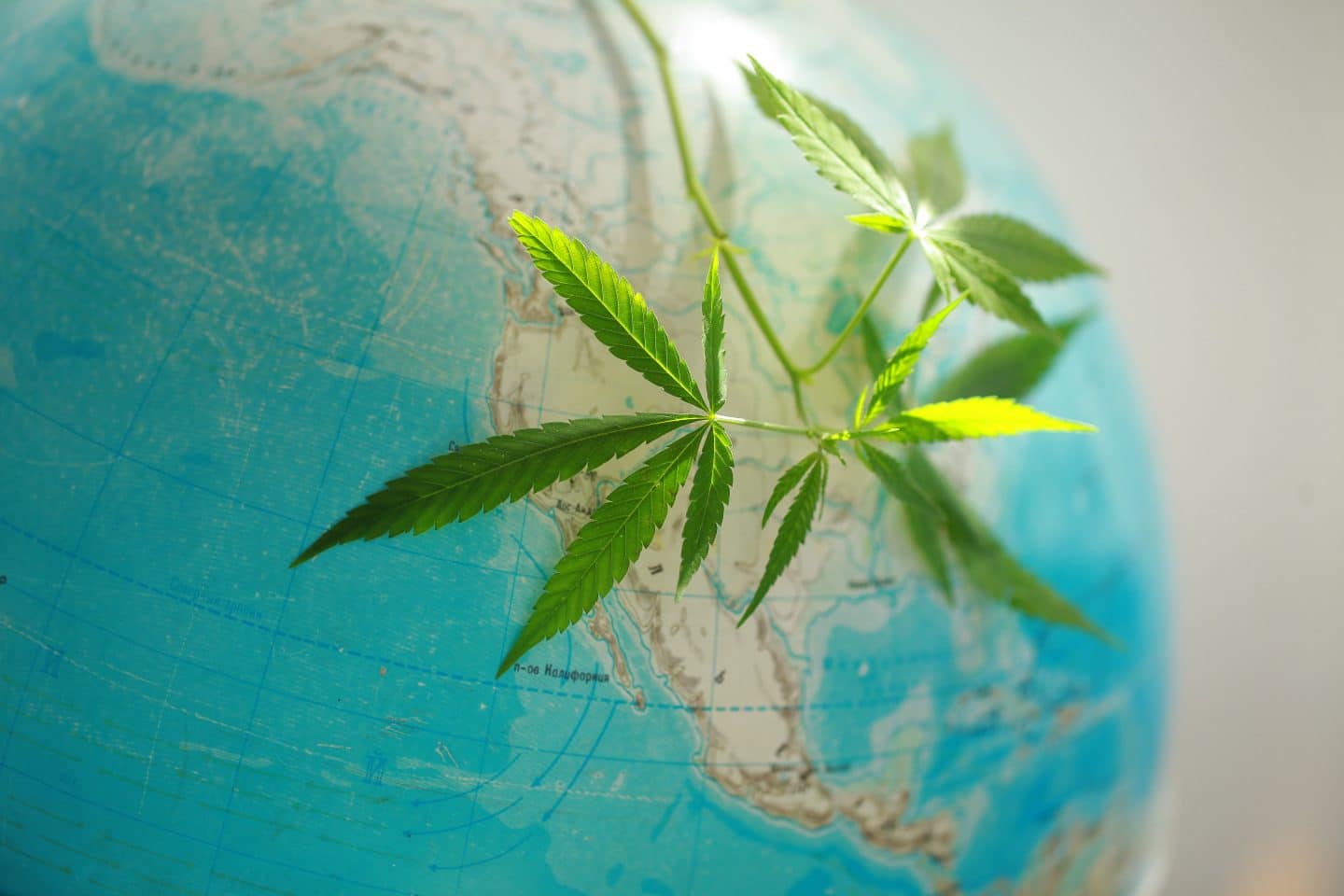
Global Cannabis Market Booms as U.S. Lags Behind in Legalization Efforts
As the global cannabis market thrives, the U.S. risks falling behind due to federal prohibition and regulatory challenges, while other regions advance with structured systems
Key Points
- 1Global cannabis market projected to reach €429 billion by late 2025
- 2Over 100 countries have adopted some form of cannabis legalization
- 3U.S. faces setbacks with new federal hemp regulations
- 4Europe leads with healthcare-focused cannabis infrastructure
- 5Israel excels in cannabis research and clinical trials
The global cannabis market is rapidly evolving, with countries around the world embracing legalization and regulation, while the United States remains mired in federal prohibition. As of late 2025, over 100 countries have adopted some form of cannabis legalization, and cross-border shipments are increasing each quarter. According to projections from Whitney Economics, the total addressable market for medical and adult-use cannabis could reach €429 billion, with potential upside to €448 billion. Meanwhile, the U.S. continues to debate the fundamentals of legalization, risking its position in an industry it once led
The U.S. faces significant setbacks with recent legislative decisions further complicating the landscape. In a move to end the longest government shutdown in history, a new federal hemp definition was approved, which will classify most hemp-derived products as Schedule I drugs starting in November 2026. This decision threatens to push the national hemp market back into legal uncertainty unless a new regulatory framework is established. While the U.S. grapples with these challenges, other regions are advancing their cannabis industries with structured regulatory systems
Europe is emerging as a leader in the cannabis industry, focusing on healthcare and infrastructure rather than hype. Jamie Pearson, CEO of New Holland Group, highlights Europe's pragmatic approach, which attracts investors with real opportunities. The continent's cannabis infrastructure is closely tied to healthcare, with Germany exemplifying this model through its pharmacy-based distribution and insurance coverage. Ivan Garev, CEO of Drapalin Pharmaceuticals, emphasizes the importance of medical supervision and insurance in ensuring patient access and safety
Latin America, with its abundant natural resources, holds immense potential in the cannabis market but faces challenges in converting this into consistent exports. Colombia is making progress with increasing exports and improved product quality, while Brazil's medical cannabis market continues to grow, projected to surpass R$1 billion by 2025. However, barriers such as import reliance and regulatory hurdles persist. Lucas Nosiglia, a veteran in the region, stresses the importance of achieving economies of scale and meeting international regulatory standards
Innovation in cannabis research is thriving outside the U.S., with countries like Israel leading the way. Israel has a well-established medical cannabis framework that integrates clinical trials and academic research, positioning it as a global leader in cannabis innovation. The country has conducted numerous clinical trials and continues to invest in research, projecting significant market growth by 2025. This focus on data and clinical outcomes sets Israel apart as a model for cannabis research and development
As the global cannabis market expands, the U.S. risks becoming irrelevant if it fails to adapt to the changing landscape. The bifurcation between hemp and higher THC cannabis in the U.S. creates confusion and limits growth opportunities. Economist Beau Whitney points out that while the U.S. presents high risks and low returns, Europe offers slower growth with lower risks and greater predictability. The global shift towards structured regulation and innovation highlights the need for the U.S. to reassess its approach to cannabis policy