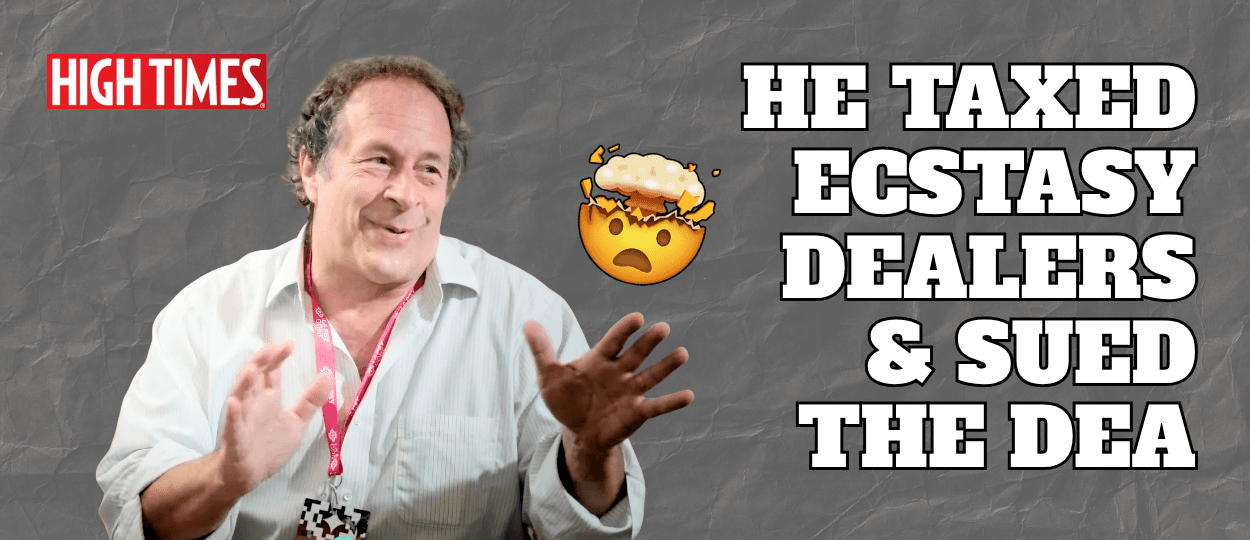
Rick Doblin Reveals How Ecstasy Dealers Funded Legal Battle Against DEA
Rick Doblin's legal battle against the DEA was funded by an unconventional 'tax' on ecstasy dealers, highlighting the intersection of drug policy and power
Key Points
- 1Rick Doblin used ecstasy dealer 'tax' to fund DEA lawsuit
- 220,000 MDMA doses supported early research and legal efforts
- 3Plans for Spanish-language therapist training in Mexico City
- 4Emphasizes MDMA accessibility in low-income regions
- 5Highlights role of underground therapists and dance culture
In a candid interview with Pato Liddle for El Planteo and High Times, Rick Doblin, founder of the Multidisciplinary Association for Psychedelic Studies (MAPS), shared the unconventional origins of his legal battle against the DEA. Speaking at LaPsyConf in Buenos Aires, Doblin recounted how he convinced ecstasy dealers to contribute to a fund aimed at challenging the DEA's emergency scheduling of MDMA. This bold move was pivotal in financing initial toxicity studies and legal efforts, setting the stage for what would become a prolonged legal confrontation with the U.S. government
Doblin's strategy was both audacious and unprecedented. Before MAPS was established in 1986, he approached ecstasy sellers with a proposal that they pay a 'tax' in the form of MDMA doses to support a legal fight against the DEA. This initiative resulted in Doblin receiving 20,000 doses of MDMA, which were used to fund early research and legal challenges. "There’s nothing like that in MAPS," Doblin clarified, emphasizing that MAPS itself is supported through legal donations. His efforts were part of a broader campaign that questioned the DEA's legal authority to ban MDMA, a move Doblin describes as a misuse of power rather than a public health necessity
The legal battle against the DEA was fraught with challenges. Doblin noted that the initial ban on MDMA was, in his view, illegal, sparking a series of court challenges and appeals. Despite the uphill battle, Doblin remained steadfast in his belief that drug policy is more about exerting control than addressing substance abuse. His efforts have also highlighted the need for broader access to MDMA-assisted therapy, particularly in regions like Latin America where such treatments lag behind global trends. Doblin is optimistic about the future, mentioning plans to conduct the first entirely Spanish-language therapist training session in Mexico City within a year
Beyond legal battles, Doblin emphasized the importance of making MDMA therapy accessible and affordable, particularly in low-income regions. He advocates for MDMA to become a generic drug in Africa and India, where trauma is prevalent and healthcare budgets are constrained. Doblin also credits underground therapists and dance culture for keeping the therapeutic potential of MDMA alive during prohibition. He believes that providing honest education and ensuring drug purity can reduce stigma and fear, allowing more people to seek help. His vision extends to using group therapy models to lower costs and increase accessibility, reflecting his commitment to making psychedelic therapy a viable option for all